
Product

Solutions
Resources
A well-implemented Multi-Tiered System of Supports (MTSS) framework can be a game changer for schools and districts, efficiently and effectively keeping more students on track for success. But the right data insights are essential for MTSS to serve as a powerful tool for identifying students who need help, documenting intervention efforts, tracking progress, and evaluating outcomes. A data-driven approach ensures that educators can meet the diverse academic, behavioral, and wellness needs of their students with greater precision.
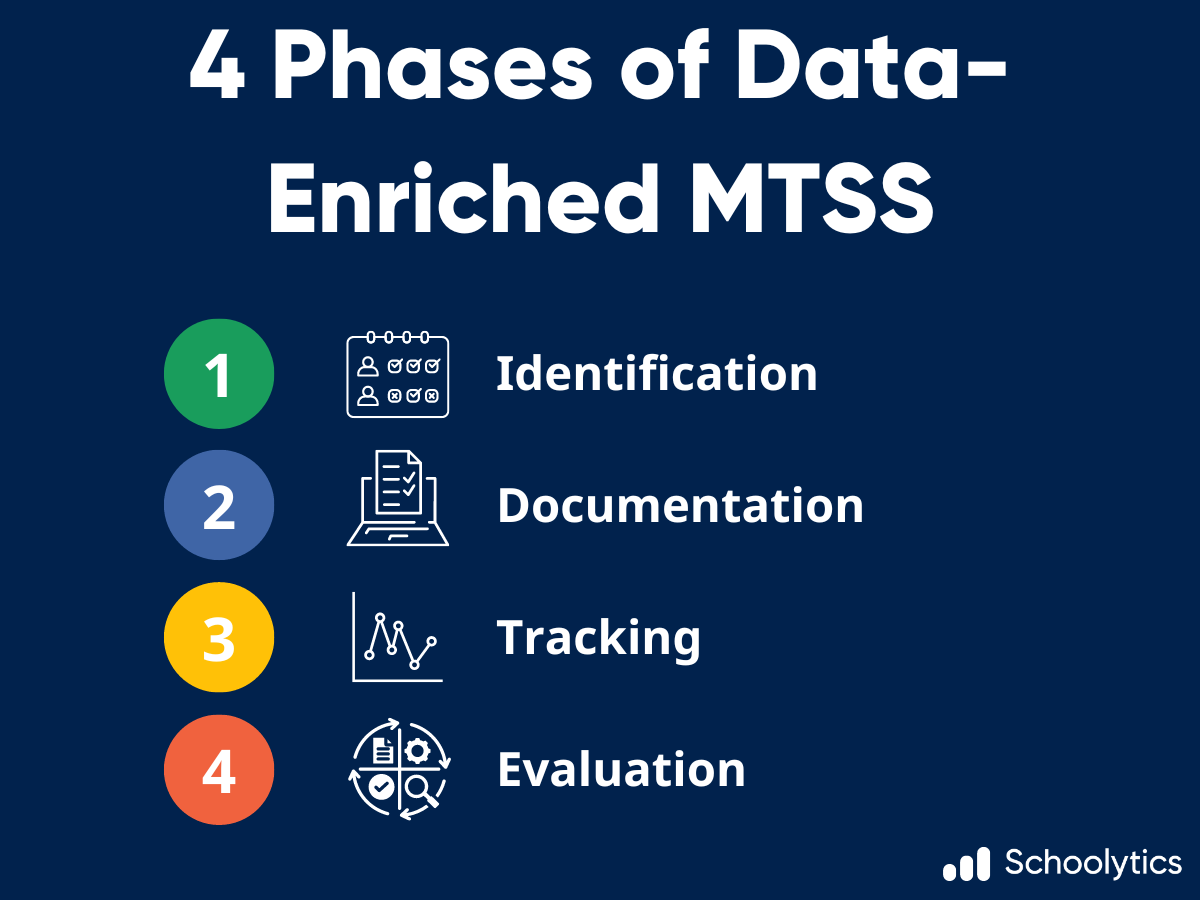
After years of working with districts across the country to build extensive MTSS workflows that take data-enriched student support to the next level, we have observed four critical phases of an exceptional end-to-end data-enriched MTSS: Identification, Documentation, Tracking, and Evaluation. Read on and steal these best practices!
The first step in any MTSS process is identifying which students need additional support. Traditionally, this process relied heavily on teacher observations or a single, often outdated, data point, such as last year's test scores. An enhanced MTSS framework leverages a multidimensional data view, where data from various sources are interconnected and housed in one central platform (like Schoolytics), making it easier to gain a holistic student view and pinpoint at-risk students across one or multiple domains, including behavior, attendance, academics, and mental health.
This multidimensional approach helps educators avoid focusing too narrowly on one issue and missing underlying or contributing factors.

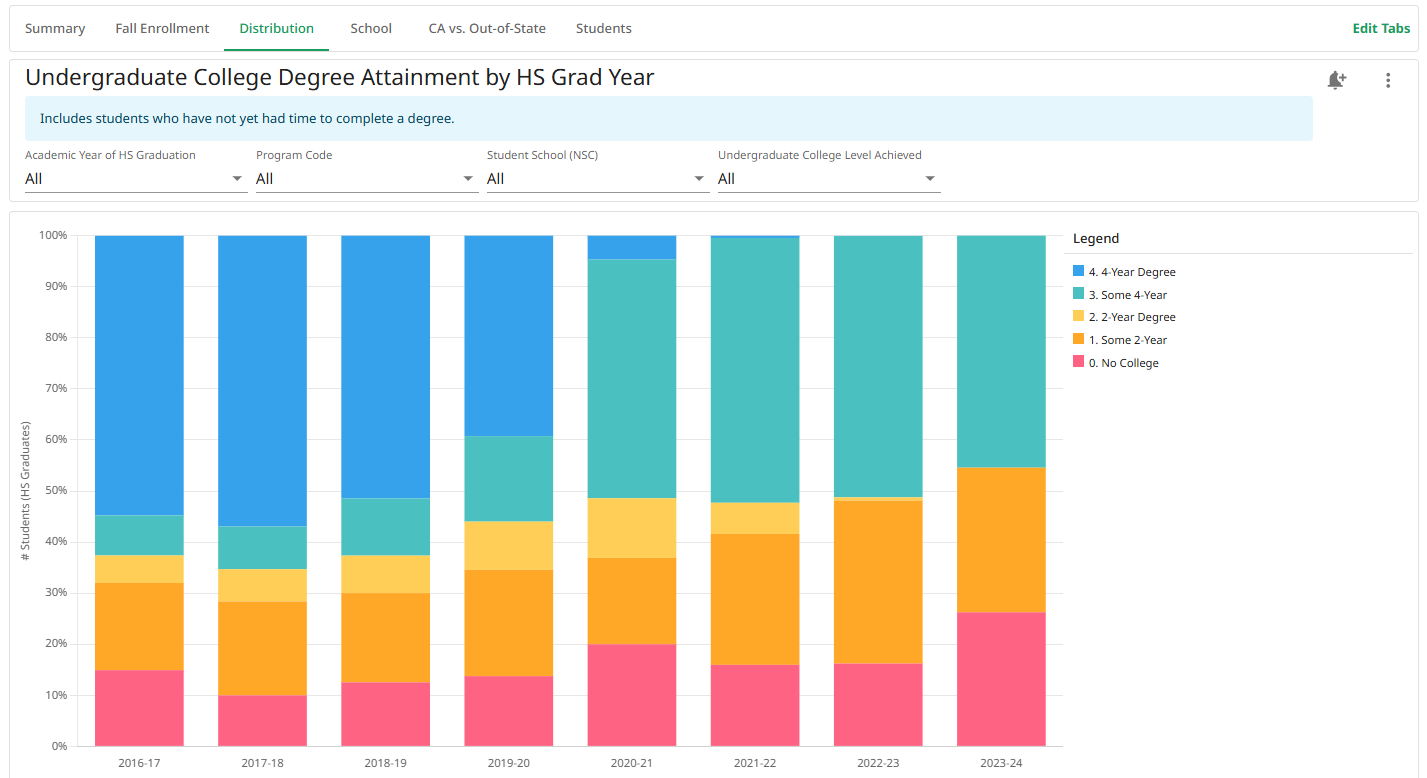
Schoolytics connects the dots across academics, attendance, and behavior
Proactively addressing student needs before they escalate requires the ability to quickly generate lists of students tackling a variety of barriers, converging on those various data points. Schoolytics simplifies the identification phase by bringing together multiple dimensions of student data into one centralized platform. Educators can easily view data on academics, attendance, behavior, and even mental health, quickly surfacing students who need additional support. Schoolytics makes it simple to set customized criteria for identifying at-risk students. For example, you can pull a list in no time for students who have missed more than 10% of school days, are failing multiple classes, AND have frequent behavioral incidents. One recent partner request involved generating a list of 10th grade English Language Learners at three of their six high schools who got a D or F in "Basic Math" in 9th grade.
Schoolytics provides instant access to these types of lists, making a data-driven, early intervention process faster. Educators can act before issues escalate, ensuring fewer students fall through the cracks.
Once students have been identified, the next step in a data-driven MTSS process is documenting their support plan. Proper documentation is crucial to ensuring that all staff members involved in the student’s learning journey are on the same page, have access to relevant information, and can track the student's progress over time. It also creates a permanent record of the interventions, strategies, and goals established for each student, which is incredibly helpful for compliance.
In an effective MTSS system, documentation should be both comprehensive and user-friendly. Educators need to track a wide array of data points: from the initial referral, through intervention plans, to ongoing progress monitoring, meetings, notes, and tasks. It’s vital to have all documentation digitized and centralized in a single platform, whether that’s Schoolytics, a Student Information System (SIS), or another system of record.
The documentation actions educators may take include:
Comprehensive documentation not only helps individual students but also streamlines the workflow for staff by providing a consistent process and clear communication channels.

Schoolytics Documentation in Action
Schoolytics shines for the educator during the documentation phase by offering intuitive, customized tools for creating and managing MTSS-related records.
Educators can create detailed intervention plans, referral records, meeting notes, tasks, and progress toward goals
Whether a teacher needs to log an intervention or an administrator wants to review past meetings, all relevant documentation is centralized and easily accessible. The platform helps eliminate paperwork clutter, streamlines communication, and provides a seamless record-keeping system, so that the MTSS process remains organized and transparent.
Tracking student progress within the MTSS framework is crucial for ensuring that interventions are effective and students are improving. An enhanced MTSS system allows schools to access real-time data on the status of students, interventions, and outcomes.
By aggregating and analyzing MTSS data, schools can:
Schoolytics Tracking in Action

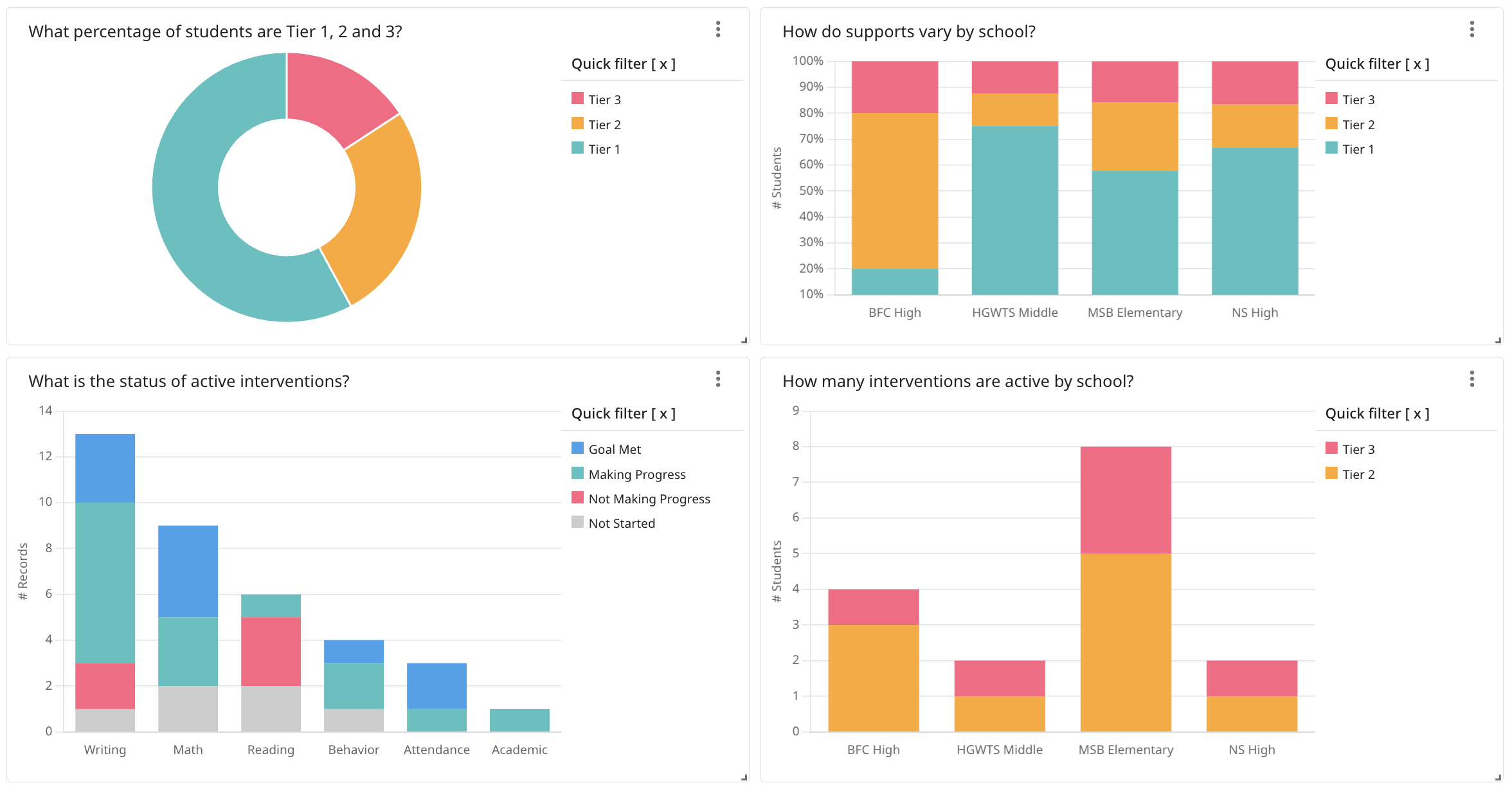
Schoolytics offers a quick glimpse into diverse interventions underway
The ability to see both the macro trends (i.e. how the number of students in each tier changes over time) and micro-level data (i.e. individual student progress) gives educators the insight needed to adjust strategies for success. Tracking student progress within the MTSS framework is simplified with Schoolytics' robust reporting features. School staff can generate reports on the number of students in various MTSS tiers, the number of active interventions, and track how these figures change over time. Schoolytics also provides visibility into trends such as the duration of interventions or whether certain subgroups are overrepresented in higher tiers. With its clear dashboards and customizable reporting tools, Schoolytics makes it easy to keep tabs on the success of interventions and adjust strategies in real time, ensuring that schools remain responsive to student needs.
The final phase of the enhanced MTSS process is evaluating the effectiveness of interventions. While tracking shows you what’s happening, evaluation helps you understand why it’s happening and whether interventions are truly driving positive outcomes.
In an enhanced MTSS system, evaluation is about connecting the dots between interventions and results. Consider:
Schoolytics Evaluation in Action
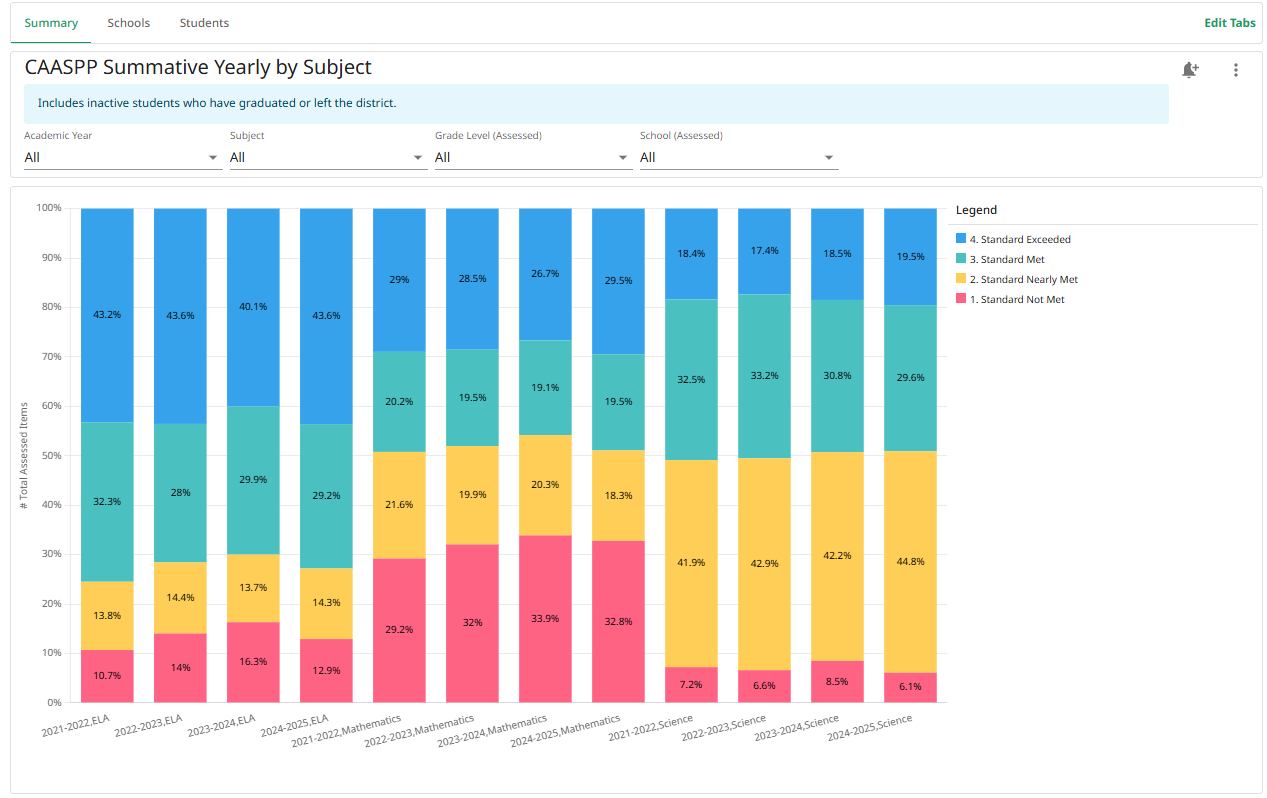
Analyzing the impact of specific interventions at both the individual student level and the program level ensures that every aspect of the MTSS process is optimized for impact. For instance, if a district implements an independent study program to combat chronic absenteeism, the data collected through an enhanced MTSS system should show whether this policy change leads to a measurable reduction in absenteeism rates. This type of macro-level evaluation enables schools to refine broader policies and initiatives based on data-driven insights.

Schoolytics stands out by having the outcomes data already in place, so connecting interventions to real-world outcomes allows districts to assess what works and why.
Schoolytics' data visualization tools make it easy to "connect the dots" between interventions and results, like tracking academic supports to improvement in test scores. These reports help educators to fine-tune their approaches and maximize student success.
An MTSS system with the right data can transform how schools identify, document, track, and evaluate student support efforts. By using Schoolytics, educators can harness the power of data to ensure every student receives the support they need to thrive. With this end-to-end approach, districts can be proactive, data-driven, and, most importantly, student-centered. Reach out for a demo!