
Product

Solutions
Resources

The beginning of another school year is upon us, and with it, a fresh opportunity for educational excellence. As districts resume classes, educators are eager to see their students and start teaching again.
At the same time, we’re still feeling the impacts of the pandemic and the sudden shift to virtual and hybrid learning. According to a report from the Government Accountability Office (GAO), a troubling 52% of teachers reported more students starting the 2020-2021 school year behind in learning. At the end of that year, 45% of teachers said that at least half of their students were still behind.
But it’s not all bad news. The U.S. Department of Education recently reported that the 2021-2022 school year had a double-digit drop in the percentage of students who were behind grade level in at least one subject. So how can teachers keep this momentum rolling through this school year to promote student success? Simple: consistently measuring and assessing student progress.
If you want to know the truth about your learners, you need student progress monitoring.
This critical aspect of data-driven instruction provides you with incredible insights into both your students’ academic work and your own instructional strategies, helping improve performance across the board. With each test or assignment you hand out and grade, you gain a better understanding of your students’ current skills and knowledge, allowing you to track growth throughout the school year. Monitoring student progress data can inform your own teaching tactics as you identify comprehension gaps and refine your next lesson plan accordingly.
When it comes to assessing student progress, there are two primary methods:
While it’s best to measure student progress data frequently through the formative assessment process, summative assessments still offer a crucial bird’s-eye view of both class-wide and individual student achievement. Combined into a unified assessment strategy, these tools provide you with complete visibility into student progress throughout the entire year. That way, you can optimize your learning goals and lesson plans for maximum student growth. If you’ve ever wished that students came with specialized instruction manuals, this is the solution for you.
As you gather and grade student work, you’ll be looking for students who’ve demonstrated mastery over a skill or concept and those who are falling behind. But keeping track of this information through spreadsheets and notebooks doesn’t cut it in a modern classroom. To accelerate learning and improve academic outcomes for all students, you need to gather, analyze and make decisions based on relevant and reliable progress data.
When you monitor student learning progress, you’re doing a whole lot more than giving a lesson and grading assignments. You need to ensure that both the work and instructional material are relevant to the course requirements as well as individual student learning goals. That way, you know you’re not only teaching the correct concepts but also collecting the right data.
As you collect more data points on student progress, you can use data analysis tools to evaluate this growth on a granular level. For instance, recent test results might show a drop-off in comprehension for all students on a given concept. In this case, you and your class can hit the pause button and go over the necessary material again — this time with a new approach.
Use the insights you gain from monitoring and evaluating student progress to drive your decision-making around learning goals, lesson plans and instructional strategies. If you notice at the beginning of the year that your students missed out on learning from the previous grade, don’t just barrel through. Instead, adjust your milestones to incorporate these unfinished concepts.
When student engagement starts declining, try changing up your teaching strategies to promote more participation. By leveraging progress data, you can develop a dynamic learning environment that gets kids excited to come to your class.
All students progress at different paces, so it’s important to plan accordingly. By developing differentiated instruction groups, you can bring students who might be falling behind back up to speed without disrupting the rest of your class. If you notice a few students starting to struggle, be proactive and create targeted interventions. When you plan for different learning tempos, you can keep all students on track for success.
On top of empowering student success, leveraging progress data provides educators with countless opportunities for informal professional development. Not taking a course in data analysis? No problem — every time you analyze performance, you’re learning more about the process, your students and your instruction. These insights benefit both students and staff, enabling you to make better decisions in the classroom.
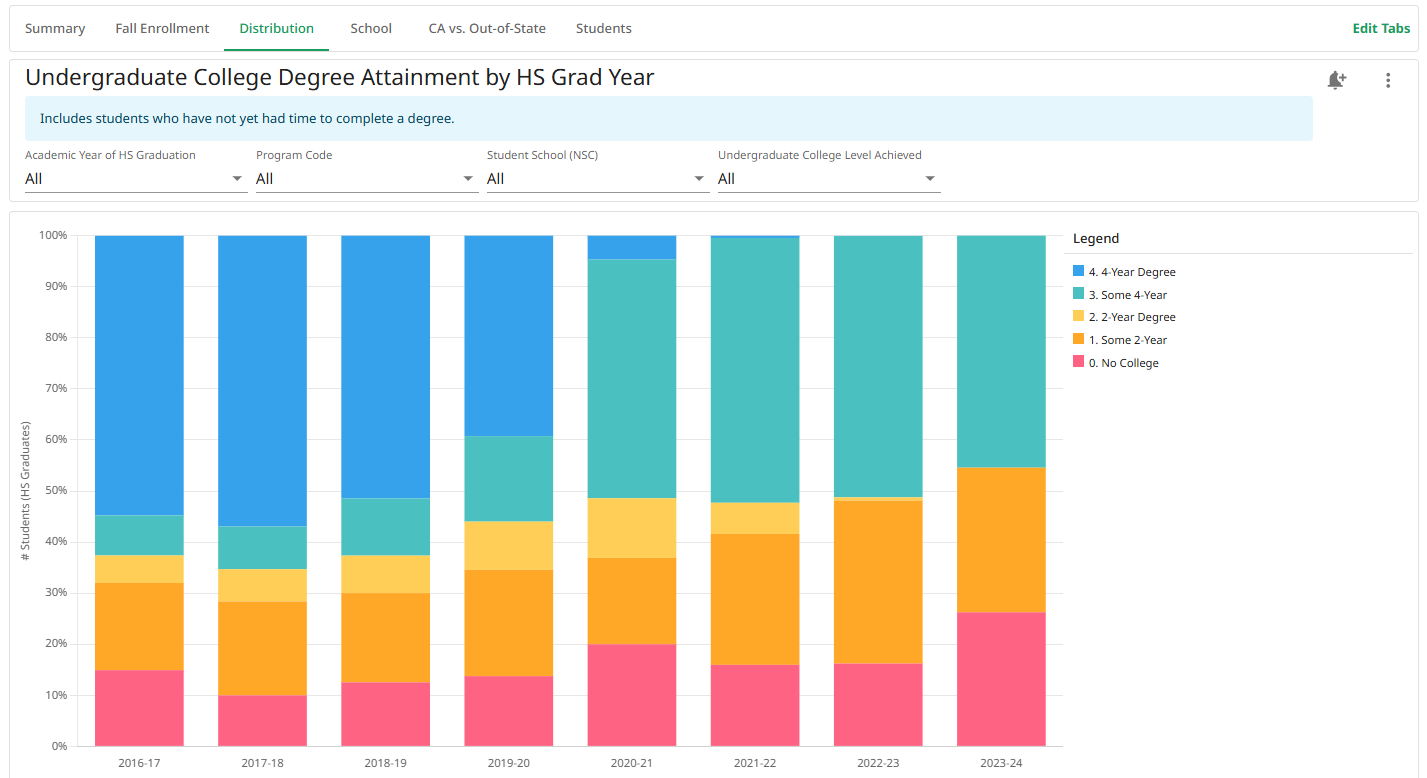
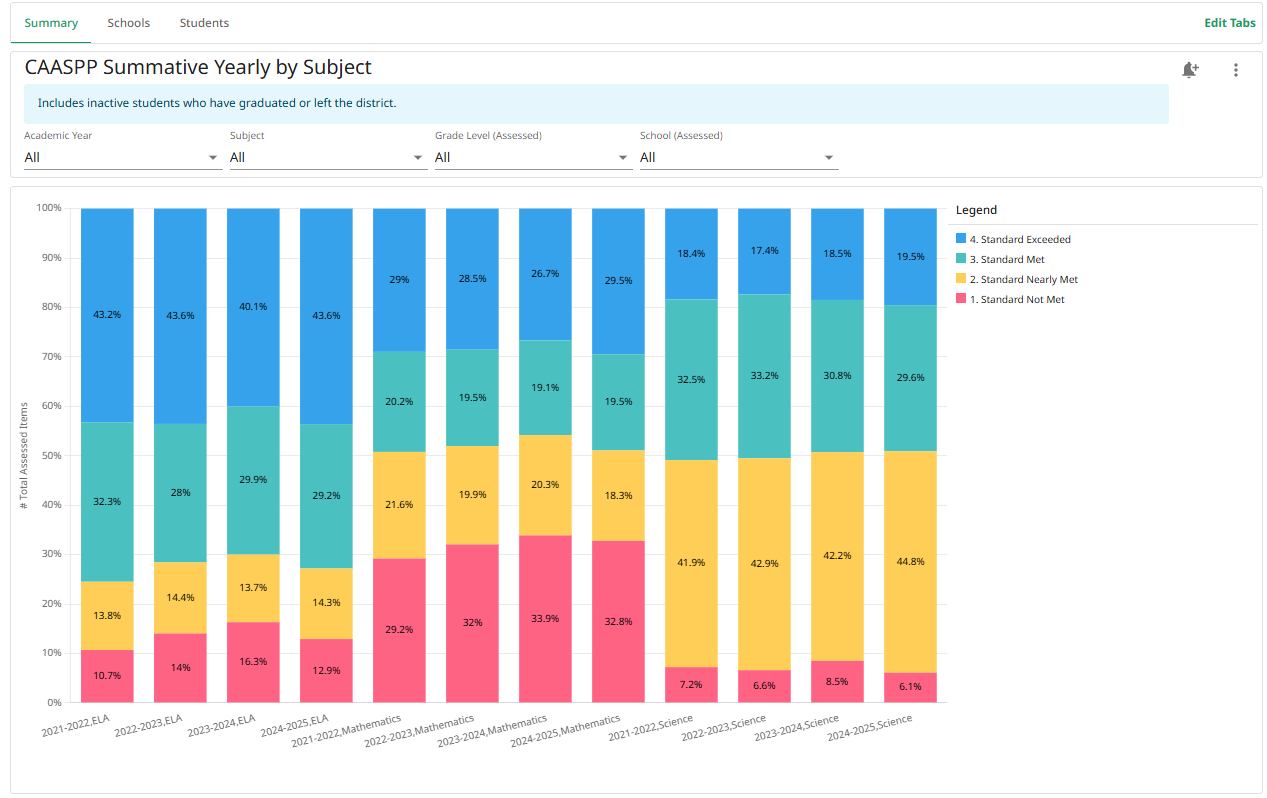
Digging through student progress data is no easy task for teachers to perform manually. A student data platform can help you organize, analyze and visualize the details to uncover specific students that need additional support. Centralizing your school’s data sources and analyzing academic progress across varying timeframes, demographics, and other attributes lets you easily identify concepts that need reinforcement and opportunities to improve instruction. Plus, visualization capabilities allow you to generate in-depth reports using charts and graphs to illustrate key findings.
But in the end, it all starts with a student data platform.
Schoolytics is an all-in-one student data platform with everything you need to collect, analyze and assess student progress data. By unifying your various systems and data sources, Schoolytics provides you with comprehensive, real-time visibility into everything, from progress and performance to attendance, behavior and much more — all from a single glass pane.
Sign up today or request a demo for your district.
data-driven instruction student progress teaching tips
0 September 13, 2022 Data-Driven Instruction Teaching Tips
Previous: Previous post: Evaluating and Optimizing Student Performance with Data
Next: Next post: A Guide to Reusing Assignments in Google Classroom